
Introduction
When choosing ghee for everyday cooking, one common question is: Cow Ghee vs Buffalo Ghee – which one is better? Both have been used in Indian kitchens for generations, but they can differ in flavour, colour, texture, milk source, and culinary use.
Cow ghee is generally associated with a lighter aroma and yellow-to-golden appearance, while buffalo ghee often has a richer, heavier taste and may appear comparatively pale or creamy. However, colour and texture alone cannot determine quality or purity.
The important thing to understand is that both are forms of clarified milk fat. Their final nutritional profiles depend on the source of milk, preparation method, storage, and individual product.
In this guide, we compare cow ghee vs buffalo ghee in detail, including taste, nutrition, cooking uses, calories, digestion considerations, storage, and how to choose the right ghee for your household.
What Is Cow Ghee?
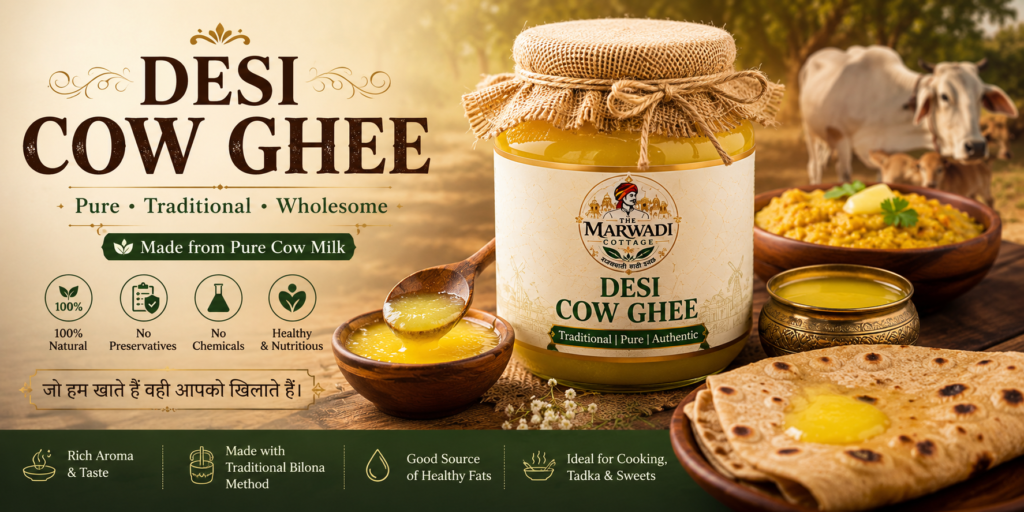
Cow ghee is clarified milk fat prepared from cow-milk-derived butter or other suitable cow dairy ingredients.
During preparation, butter is gently heated until most water evaporates and milk solids separate from the fat. The clarified fat is then filtered and stored as ghee.
Cow ghee is commonly valued for:
- Traditional Indian cooking
- Distinct aroma
- Golden or yellowish appearance
- Use in dal, roti, khichdi and sweets
- Compatibility with everyday meals
Its exact colour and flavour can vary according to feed, season, milk source, and production method.
What Is Buffalo Ghee?
Buffalo ghee is prepared in a similar way but uses buffalo-milk-derived ingredients.
Generally Buffalo milk contains more fat than cow milk, which is one reason buffalo dairy products are often perceived as richer and creamier.
Buffalo ghee may have:
- Richer flavour
- Dense or creamy character
- Pale-to-cream appearance
- Strong suitability for sweets and rich dishes
- Traditional use in Indian households
Again, the exact product depends on the milk source and manufacturing process.
Cow Ghee vs Buffalo Ghee: Quick Comparison
| Feature | Cow Ghee | Buffalo Ghee |
| Milk source | Cow milk | Buffalo milk |
| Typical appearance | Yellow to golden | Often pale or creamy |
| Taste | Often lighter | Often richer and heavier |
| Aroma | Distinctive traditional aroma | Rich, creamy aroma |
| Common use | Everyday cooking | Rich dishes and sweets |
| Calories | High | High |
| Main nutrient | Fat | Fat |
| Texture | Varies by temperature | May feel denser |
| Best choice | Depends on preference | Depends on preference |
Neither type is automatically superior. Quality depends heavily on the actual product.
Cow Ghee vs Buffalo Ghee Nutrition
The most important nutritional point is that both cow ghee and buffalo ghee are primarily fat.
During clarification, most water and milk solids are removed.
Therefore, both generally contain:
- High amounts of dietary fat
- Significant calories
- Saturated fat
- Smaller amounts of unsaturated fats
- Very little carbohydrate
- Very little protein
Exact values vary by manufacturer and serving size.
This means the nutritional difference between cow and buffalo ghee is often less dramatic than online marketing may suggest.
If nutrition matters to you, check the actual label rather than relying only on the animal source.
Cow Ghee vs Buffalo Ghee Calories
Both types of ghee are calorie-dense because they are concentrated fats.
Fat provides roughly 9 calories per gram, so even a small spoonful of ghee can add a meaningful amount of energy to a meal.
Therefore, whether you choose cow or buffalo ghee, portion size matters.
Using a small quantity for flavour, tadka, or serving can fit more easily into a balanced diet than consuming large amounts simply because the product is marketed as natural or traditional.
Which Has More Fat: Cow Ghee or Buffalo Ghee?
Buffalo milk generally contains more fat than cow milk.
However, once both are converted into ghee, the final product is predominantly fat in either case.
So while the starting milk is different, finished ghee products may be more nutritionally similar than consumers expect.
This is why it is better to compare actual nutritional labels when choosing between products.
Cow Ghee vs Buffalo Ghee Taste
Taste is one of the clearest practical differences.
Cow Ghee Taste
Cow ghee is often described as:
- Aromatic
- Slightly lighter
- Smooth
- Suitable for everyday Indian cooking
It works particularly well with foods where you want flavour without making the dish feel overly rich.
Buffalo Ghee Taste
Buffalo ghee is often:
- Richer
- Heavier
- Creamier
- More suitable for indulgent dishes
It can be especially appealing in traditional sweets and rich festive preparations.
Ultimately, taste preference is personal.
Cow Ghee vs Buffalo Ghee Colour
Cow ghee is often yellowish or golden, while buffalo ghee may appear whiter or creamier.
However, this is only a general observation.
Colour can vary because of:
- Animal feed
- Season
- Breed
- Manufacturing process
- Storage
- Temperature
Therefore, you should never use colour alone to determine purity.
Which Ghee Is Better for Daily Cooking?
For everyday foods such as:
- Dal
- Roti
- Khichdi
- Rice
- Sabzi
- Tadka
many people prefer cow ghee because of its familiar aroma and comparatively lighter flavour.
However, buffalo ghee can also be used perfectly well for daily cooking.
The better choice depends on:
- Taste preference
- Budget
- Recipe
- Dietary needs
- Product quality
There is no universal rule that everyone must choose one over the other.
Which Ghee Is Better for Sweets?
Buffalo ghee may be especially appealing in recipes where a rich, full-bodied taste is desired.
Examples include:
- Besan ladoo
- Atta halwa
- Moong dal halwa
- Panjiri
- Churma
- Traditional mithai
Cow ghee is also widely used in sweets, so the difference is mainly about flavour and texture preference rather than a strict cooking rule.
Cow Ghee vs Buffalo Ghee for Dal Baati Churma
For Rajasthan-inspired cooking, both can work.
Dal Baati Churma traditionally relies heavily on ghee for aroma and richness.
Cow ghee may offer a more aromatic and lighter profile, while buffalo ghee may make the dish feel richer and heavier.
At The Marwadi Cottage, traditional Rajasthani taste is an important part of our food philosophy, so choosing the right ghee ultimately depends on the flavour experience you want.
Which Ghee Is Easier to Digest?
You may find online claims suggesting one type of ghee is always easier to digest than the other.
This is too simplistic.
Both cow and buffalo ghee are concentrated fats, and individual tolerance can vary considerably.
Factors such as:
- Portion size
- Overall diet
- Individual digestion
- Health conditions
- Cooking method
may matter more than whether the ghee came from a cow or buffalo.
If you experience digestive symptoms after consuming high-fat foods, reducing quantity and seeking qualified dietary advice may be more helpful than relying on broad online claims.
Is Cow Ghee Healthier Than Buffalo Ghee?
There is no simple answer.
Cow ghee is sometimes marketed as significantly healthier, while buffalo ghee is sometimes promoted as more nourishing.
In reality, both are concentrated sources of fat and calories.
Their health impact depends heavily on:
- How much you consume
- What else you eat
- Total saturated fat intake
- Overall calorie balance
- Individual nutritional needs
Neither should be treated as a medicine or miracle food.
The quality of the product and your total diet matter more than choosing based only on marketing claims.
Cow Ghee vs Buffalo Ghee for Weight Management
Neither type of ghee automatically causes weight loss.
Because ghee is energy-dense, excessive intake can add significant calories.
If weight management is your goal, focus on:
- Portion size
- Total daily calorie intake
- Protein and fiber intake
- Regular physical activity
- Overall food quality
A small amount of ghee can still be used for flavour as part of a balanced eating plan.
Which Ghee Is Better for Children?
Ghee is commonly included in Indian family meals, but the amount suitable for children depends on age, overall diet, growth needs, and individual circumstances.
There is no universal rule that cow ghee is always better than buffalo ghee for every child.
Parents should focus on overall nutrition rather than one ingredient.
For children with allergies, dietary conditions, or specific nutritional needs, professional advice is appropriate.
Cow Ghee vs Buffalo Ghee: Cooking Uses
Best Uses for Cow Ghee
Cow ghee works beautifully with:
- Dal tadka
- Khichdi
- Roti
- Paratha
- Rice
- Sabzi
- Everyday home cooking
- Traditional sweets
Best Uses for Buffalo Ghee
Buffalo ghee can be especially suitable for:
- Halwa
- Ladoo
- Churma
- Rich parathas
- Festive dishes
- Traditional sweets
- Recipes where a richer flavour is desired
Both can overlap significantly in cooking.
How to Choose Pure Cow or Buffalo Ghee
Whether you’re buying cow ghee or buffalo ghee, quality should be your first priority.
1. Check the Ingredient List
The milk-fat source should be clearly mentioned.
2. Check the Manufacturer Details
Look for transparent manufacturer and packaging information.
3. Review Nutrition Information
Check calories, total fat, saturated fat, and serving size.
4. Check the Preparation Method
If you’re specifically looking for traditional Bilona-style ghee, confirm that the manufacturer actually states the preparation method.
5. Look at Packaging
The jar or container should be sealed, clean, and undamaged.
6. Avoid Unrealistic Claims
Be careful with products promising disease cures, guaranteed weight loss, detoxification, or similar extraordinary outcomes.
Can You Identify Pure Ghee at Home?
Many online videos recommend home tests involving:
- Refrigeration
- Melting
- Colour
- Aroma
- Graininess
These observations may tell you something about texture or behaviour, but they cannot reliably prove all forms of adulteration.
Laboratory testing and trustworthy sourcing are far more reliable.
Don’t assume a product is pure simply because it passes a viral kitchen test.
How to Store Cow Ghee and Buffalo Ghee
Both should be handled similarly.
Storage Tips
- Keep the jar tightly sealed.
- Always use a clean, dry spoon.
- Prevent moisture from entering the container.
- Store away from excessive heat.
- Avoid unnecessary direct sunlight.
- Follow the label’s storage instructions.
Ghee can naturally change texture with temperature.
It may become firmer in winter and softer during warmer weather.
Cow Ghee vs Buffalo Ghee: Which Should You Buy?
Choose Cow Ghee if you prefer:
- Lighter traditional flavour
- Golden appearance
- Everyday use
- Dal, roti and khichdi
- Familiar cow-ghee aroma
Choose Buffalo Ghee if you prefer:
- Richer taste
- Creamier character
- Traditional sweets
- Rich parathas
- Heavier festive foods
But don’t choose based on animal source alone.
A high-quality, transparently labelled buffalo ghee can be a better purchase than a poorly sourced cow ghee—and vice versa.
Why Choose The Marwadi Cottage Ghee?
At The Marwadi Cottage, our focus is on traditional Indian and Rajasthani foods prepared with attention to authenticity, quality, and familiar homemade taste.
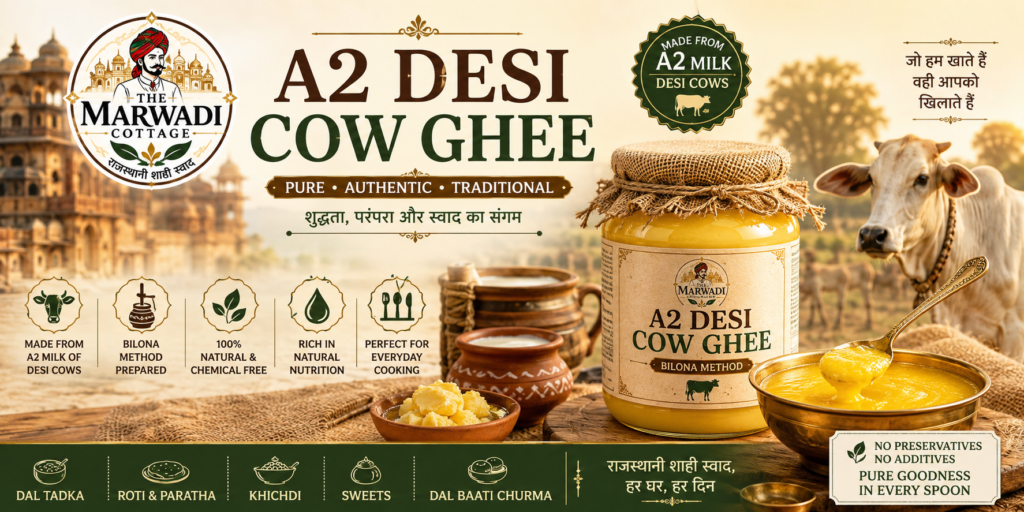
Whether you prefer Desi Cow Ghee or Buffalo Ghee, the important qualities remain the same:
- Quality ingredients
- Authentic flavour
- Traditional inspiration
- Hygienic preparation
- Transparent product information
- Secure packaging
Our philosophy reflects the kind of food experience we want to offer:
“जो हम खाते हैं वही आपको खिलाते हैं।”
And our brand celebrates the rich traditional identity of:
“राजस्थानी शाही स्वाद।”
Conclusion
The Cow Ghee vs Buffalo Ghee debate doesn’t have one winner for everyone.
Cow ghee generally offers a lighter, aromatic flavour and is widely preferred for everyday dishes such as dal, roti, and khichdi.
Buffalo ghee often provides a richer, creamier taste and can work especially well in sweets, festive recipes, and heavier traditional foods.
Nutritionally, however, both are predominantly concentrated milk fat and should be consumed with portion size in mind.
Instead of asking only “Which ghee is healthier?”, a better question is:
Which high-quality ghee suits my taste, cooking style, and dietary needs?
Choose a product with transparent ingredients, clear labelling, good packaging, and trustworthy preparation rather than relying solely on marketing claims.
Frequently Asked Questions
1. Which is better: cow ghee or buffalo ghee?
Neither is universally better. Cow ghee is often lighter and more aromatic, while buffalo ghee can be richer and creamier. The best choice depends on taste, recipe, and individual dietary needs.
2. Which has more calories, cow ghee or buffalo ghee?
Both are concentrated fats and therefore calorie-dense. Product-specific calorie values should be checked on the nutrition label.
3. Is buffalo ghee richer than cow ghee?
Buffalo milk naturally contains more fat than cow milk, and buffalo ghee is often perceived as richer in flavour. However, finished ghee from either source consists predominantly of fat.
4. Which ghee is best for sweets?
Both can be used, but buffalo ghee may appeal to people who prefer a richer taste in halwa, ladoo, churma, and other traditional sweets.
5. Can cow and buffalo ghee be used every day?
Either may be used in reasonable amounts as part of a balanced diet. Since ghee is calorie-dense and contains saturated fat, overall intake should be considered.