Introduction
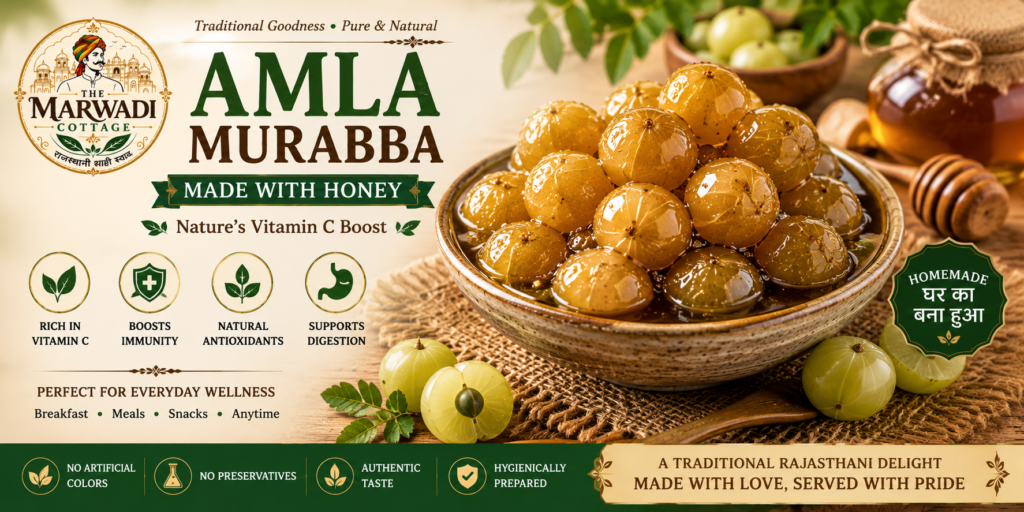
Looking for a way to enjoy the benefits of amla without its strong sour taste? Amla Honey Murabba takes the flavor of amla, which is Indian gooseberry and mixes it with the smooth and naturally sweet taste of honey. This creates a traditional-style preserve that’s both full of flavor and easy to eat.
Amla has been part of food traditions for many years. It is naturally rich in Vitamin C, fiber, polyphenols and antioxidants. Honey brings sweetness and a special smell that works well with the tartness of amla.
Nowadays people who want Amla Murabba with honey honey Amla Murabba, homemade Amla Murabba or natural Amla products are often looking for a choice instead of regular sweet preserves. In this guide we will talk about what Amla Honey Murabba’s its nutritional value, possible benefits how to serve it tips, for keeping it and things to think about when buying it online.
What Is Amla Honey Murabba?
Amla Honey Murabba is a sweet-n-tangy fruit preserve made using amla and honey. Depending on the recipe, whole amla fruit may be softened or prepped before being mixed with honey so that they will acquire a tender texture and balanced flavor.
Traditional recipes can vary, but the main ingredients usually include:
- Fresh amla (Indian gooseberry)
- Honey
- Optional traditional spices or flavoring ingredients
The result is a rich, fruity preserve that can be enjoyed with breakfast, alongside Indian meals, or as a small sweet treat.
Nutritional Qualities of Amla
Amla is widely valued because of its natural nutritional profile. Fresh amla contains:
Vitamin C
Amla is naturally rich in Vitamin C, an essential nutrient that contributes to normal immune function and collagen formation.
Antioxidant Compounds
Amla contains polyphenols and other naturally occurring antioxidant compounds.
Dietary Fiber
Fiber contributes to normal digestive function and is an important component of a balanced diet.
Plant Compounds
Amla contains several naturally occurring phytochemicals that contribute to its nutritional value.
However, processing and storage can affect nutrient levels, particularly heat-sensitive Vitamin C. Therefore, the nutritional content of finished Amla Honey Murabba may differ from fresh amla.
Potential Benefits of Amla Honey Murabba
1. Provides Nutrients from Amla
One of the main advantages of Amla Honey Murabba is that it provides an enjoyable way to include amla in your diet.
Fresh amla can be extremely sour, which makes it difficult for some people to eat regularly. Combining it with honey makes its flavor more approachable.
2. Contains Vitamin C
Vitamin C contributes to several normal body functions, including:
- Normal immune system function
- Normal collagen formation
- Protection of cells from oxidative stress
- Normal functioning of skin and connective tissues
Because murabba undergoes preparation and storage, its Vitamin C content can vary.
3. Contains Naturally Occurring Antioxidants
Polyphenolic and antioxidant compounds are present in amla.
Fruits, vegetables, herbs and other plant foods often contain a lot of antioxidants. Different kinds of these foods are an important part of balanced nutrition.
Amla is a fruit that can be added to that variety.
4. May Complement Digestive Wellness
Amla has been a part of traditional Indian dietary practices including Ayurveda for digestive wellness.
Plus, its naturally occurring fiber helps promote normal digestive function.
However, Amla Honey Murabba is to be taken as a food and not as a cure for digestive problems.
5. Honey Makes Amla Easier to Enjoy
Raw amla is very sour and slightly bitter in taste. The honey adds a natural sweetness to counter that taste.
This combination may make Amla Honey Murabba attractive to those who want to include amla in their diets but do not like to eat it raw.
6. Convenient Traditional Food
Another advantage is convenience.
A properly prepared and packaged Amla Honey Murabba can be served quickly with breakfast or meals without needing to prepare fresh amla every day.
This makes it particularly suitable for busy households that still enjoy traditional Indian foods.
Amla Honey Murabba vs Sugar-Based Amla Murabba
The sweetener used can significantly change the taste of Amla Murabba.
| Amla Honey Murabba | Sugar-Based Amla Murabba |
| Sweetened with honey | Typically sweetened with refined sugar |
| Floral, distinctive aroma | Neutral sweet flavor |
| Rich sweet-and-tangy taste | Traditional sugary sweetness |
| Honey complements amla’s tartness | Sugar strongly reduces sourness |
| Still contains natural sugars | Contains added refined sugar |
Honey should not be considered sugar-free. It naturally contains sugars and calories, so portion control remains important.
Honey vs Jaggery Amla Murabba
Both honey and jaggery can produce delicious Amla Murabba, but their flavors are different.
Honey Amla Murabba generally has a smoother, floral sweetness.
Jaggery Amla Murabba usually has a deeper, earthy, caramel-like flavor.
People who enjoy a lighter aromatic sweetness may prefer honey, while those looking for a more traditional gur flavor may prefer jaggery.
Both should be enjoyed in moderation as part of a balanced diet.
How to Enjoy Amla Honey Murabba
Amla Honey Murabba can be enjoyed in several ways.
With Breakfast
A small serving can accompany paratha, poha, upma, or other breakfast dishes.
As a Sweet Snack
Enjoy a small piece of amla when you’re craving something sweet and tangy.
With Traditional Indian Meals
It can complement foods such as:
- Chapati
- Paratha
- Poori
- Thepla
- Khichdi
- Dal and rice
In a Traditional Indian Thali
A small serving can add sweetness and tanginess to a complete Indian meal.
How Much Amla Honey Murabba Should You Eat?
Since honey naturally contains sugars, portion size is important.
Usually it takes a little bit to taste the taste of the product. The amount that’s right for you will depend on your overall diet, calorie needs, and sugar intake.
If you have diabetes, are monitoring your blood sugar or are on a low-sugar diet, check the nutrition label and seek individual dietary advice where appropriate.
How Is Amla Honey Murabba Prepared?
Recipes vary between households and manufacturers, but the general process involves several stages.
1. Selecting Quality Amla
Fresh, firm amla fruits are selected and thoroughly cleaned.
2. Preparing the Amla
The fruit may be steamed, lightly cooked, pierced, or prepared using another traditional technique to achieve the desired texture.
3. Combining with Honey
The prepared amla is combined with honey according to the recipe.
4. Developing Flavor
The mixture is allowed to develop its characteristic sweet-and-tangy flavor and tender texture.
5. Hygienic Packaging
The finished murabba is packed in clean, dry, food-safe containers to help maintain its quality.
What to Look for When Buying Amla Honey Murabba Online
If you’re planning to buy Amla Honey Murabba online, don’t judge a product only by its packaging.
Check the Ingredients
Look at whether honey is actually used and whether additional sugar or sweeteners are included.
Check the Amla Quality
Quality amla contributes significantly to the final taste and texture.
Check Nutrition Information
Review the serving size, total sugar, calories, and other available nutritional information.
Look for Proper Packaging
The container should be properly sealed and suitable for storing fruit preserves.
Check Storage Instructions
Always follow the manufacturer’s storage and refrigeration recommendations.
How to Store Amla Honey Murabba
Correct storage can help preserve its quality.
Keep these simple practices in mind:
- Keep the container tightly closed.
- Always use a clean, dry spoon.
- Avoid introducing water into the jar.
- Keep it away from excessive heat and direct sunlight.
- Refrigerate after opening when instructed on the label.
- Follow the product’s best-before and storage instructions.
Do not consume the product if you notice mold, unusual fermentation, an unpleasant smell, or significant changes in appearance.
Why Choose The Marwadi Cottage Amla Honey Murabba?
At The Marwadi Cottage, we believe traditional Indian foods should deliver both authentic flavor and a memorable homemade-style experience.
Our approach to Amla Honey Murabba focuses on combining the naturally tangy character of amla with the smooth sweetness of honey to create a rich and satisfying preserve.
It is an excellent choice for people searching for:
- Homemade-style Amla Murabba
- Amla Murabba with honey
- Traditional Indian fruit preserves
- Sweet and tangy amla products
- Authentic Indian foods online
Inspired by India’s traditional food culture, The Marwadi Cottage aims to bring familiar flavors to today’s households through carefully prepared and hygienically packed products.
Our philosophy remains simple: “जो हम खाते हैं वही आपको खिलाते हैं।”
Is Amla Honey Murabba Suitable for Everyone?
For most people, Amla Honey Murabba can be enjoyed as a sweet preserve within a varied diet. However, it contains honey and therefore naturally occurring sugars.
It is important to remember that honey is not a sugar-free ingredient.
People managing diabetes, blood sugar levels, allergies, or specific dietary conditions should consider their individual requirements before consuming it regularly.
Honey should also not be given to children under 12 months of age because of the risk of infant botulism.
A Traditional Flavor for Modern Homes
One reason traditional foods like Amla Murabba remain popular is their ability to connect generations.
The familiar combination of amla and sweetness can remind people of homemade preparations while still fitting conveniently into today’s lifestyles.
Whether you enjoy it at breakfast, alongside a traditional meal, or occasionally as a sweet treat, Amla Honey Murabba offers an interesting way to experience one of India’s most recognizable fruits.
Conclusion
Amla Honey Murabba brings together the naturally tart flavor of Indian gooseberry and the smooth sweetness of honey in a traditional-style fruit preserve.
Amla naturally contains Vitamin C, fiber, polyphenols, and antioxidant compounds, while honey gives the murabba its distinctive sweet flavor and aroma. The combination makes amla easier and more enjoyable to include in everyday eating.
The key is moderation. Honey still contributes sugars and calories, so Amla Honey Murabba is best treated as a flavorful addition to a balanced diet rather than a medicinal product.
For customers searching for homemade Amla Honey Murabba, Amla Murabba with honey, or traditional Indian fruit preserves, The Marwadi Cottage brings the authentic spirit of Indian food traditions closer to home.
Frequently Asked Questions (FAQs)
1. What is Amla Honey Murabba?
Amla Honey Murabba is a traditional-style fruit preserve made by combining prepared Indian gooseberries (amla) with honey, resulting in a sweet and tangy flavor.
2. What are the benefits of Amla Honey Murabba?
Amla naturally provides Vitamin C, fiber, polyphenols, and antioxidant compounds. A honey-based murabba can be an enjoyable way to include amla in a varied diet, although processing can affect nutrient levels.
3. Is Amla Honey Murabba sugar-free?
No. Even when no refined sugar is added, honey naturally contains sugars. Always check the product’s ingredient and nutrition information.
4. Can Amla Honey Murabba be eaten daily?
It may fit into many diets in a small portion, but total sugar and calorie intake should be considered. Individual dietary requirements can vary.
5. How should Amla Honey Murabba be stored?
Keep it in a tightly sealed container, use a clean and dry spoon, avoid moisture, and follow the storage and refrigeration instructions on the product label.