Introduction
Mango pickle, which people also call Aam Ka Achar is something that a lot of people love to eat in homes. The taste of mango pickle is really nice. It is sour and spicy and full of flavor. This makes it a great thing to eat with food like dal and rice or parathas or chapati or khichdi or curd rice or stuffed rotis. People like to eat mango pickle because it tastes so good.. Some people also ask if mango pickle is good for our health.
The answer to this question is yes mango pickle is good for our health if we do not eat much of it. If we make mango pickle at home with raw mangoes and traditional spices and good oil then it can be a nice and tasty part of our daily food. Raw mangoes have things like Vitamin C that’re good for us. And spices like turmeric and mustard and fenugreek and fennel make the mango pickle taste good. Also have naturally good things in them.
We have to be careful when we eat mango pickle because it usually has salt and oil in it to keep it fresh. So we should only eat a bit of it. In this article we will talk about what’s good and bad about mango pickle and how we can store it and eat it in a good way. We will also talk about the things that mango pickle can do for our health and the things that we should be careful, about when we eat mango pickle.
What Is Mango Pickle?
Mango pickle is an Indian preserve. It is made using mangoes then uses salt which uses spices and oil. The oil is usually mustard oil or sesame oil. The mango pieces are cured. The curing takes days or weeks. During this time the mangoes absorb the spices. They develop their tangy and spicy flavor.
Popular varieties include:
- Traditional North Indian mango pickle
- South Indian mango pickle
- Oil-based mango pickle
- Oil-free mango pickle
- Sweet mango pickle
- Garlic mango pickle
- Instant mango pickle
Each variation has its own unique taste and preparation method.
Nutritional Value of Mango Pickle
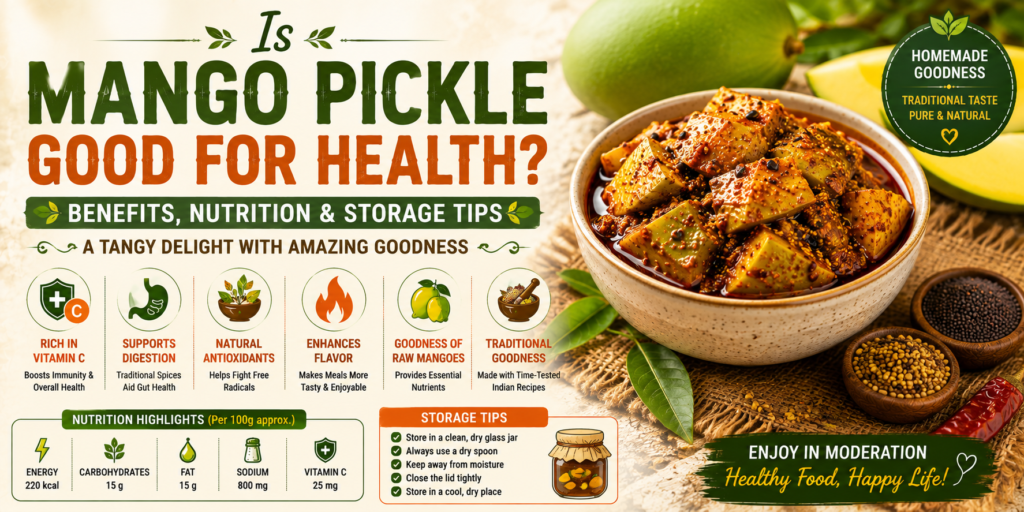
The exact nutritional value depends on the ingredients and recipe, but homemade mango pickle typically contains:
- Vitamin C from raw mangoes
- Dietary fiber
- Natural antioxidants
- Small amounts of potassium
- Plant compounds from spices
Traditional recipes also include:
- Mustard oil or sesame oil
- Salt
- Turmeric
- Red chili powder
- Mustard seeds
- Fenugreek seeds
- Fennel seeds
- Asafoetida (hing)
Because of the salt and oil used for preservation, mango pickle should be enjoyed in moderate amounts.
Health Benefits of Mango Pickle
1. Contains Vitamin C
Raw mangoes are naturally rich in Vitamin C, which supports normal immune function, collagen production, and antioxidant protection.
Although some Vitamin C may decrease during pickling, homemade mango pickle can still contribute to your overall intake.
2. Rich in Traditional Spices
Homemade mango pickle contains spices such as turmeric, mustard, fenugreek, fennel, and hing.
These spices have long been used in traditional Indian cooking for their flavor and culinary value.
3. Adds Flavor to Healthy Meals
A small serving of mango pickle can enhance the taste of everyday meals such as:
- Dal and rice
- Chapati
- Paratha
- Khichdi
- Curd rice
- Thepla
- Poori
- Stuffed parathas
Using pickle as a condiment can make balanced meals more enjoyable.
4. Natural Antioxidants
Raw mangoes and traditional spices contain naturally occurring antioxidants that help protect cells from oxidative stress as part of a healthy diet.
5. Traditional Food Preservation
Pickling is a time-tested method of preserving seasonal raw mangoes, allowing families to enjoy their flavor long after the harvest season.
Is Homemade Mango Pickle Better Than Store-Bought?
Homemade mango pickle offers several advantages:
- Greater control over ingredients
- Adjustable salt and spice levels
- Fresh preparation
- Traditional family recipes
- Fewer unnecessary additives in many recipes
Store-bought pickles can also be a good option when made by trusted brands using quality ingredients and hygienic manufacturing practices. Always review the ingredient list and nutrition information before purchasing.
Are There Any Health Risks?
While mango pickle can be enjoyed as part of a balanced diet, moderation is important.
High Sodium Content
Traditional recipes rely on salt for preservation. People following low-sodium diets or managing high blood pressure should monitor their intake and seek personalized dietary advice if needed.
Oil Content
Mustard oil or sesame oil contributes flavor and helps preserve the pickle, but it also increases calorie content.
Added Sugar in Sweet Recipes
Some regional mango pickle recipes include jaggery or sugar, which increases carbohydrate content. If you’re monitoring your sugar intake, check the recipe or product label.
How Much Mango Pickle Should You Eat?
A small serving alongside meals is generally enough to enjoy the flavor without consuming excessive salt or oil.
Appropriate portion sizes depend on your overall dietary pattern and individual health needs.
Storage Tips for Homemade Mango Pickle
Proper storage helps maintain freshness and quality.
Follow these tips:
- Store the pickle in a sterilized glass jar.
- Keep the jar tightly sealed.
- Use only clean, dry spoons.
- Store in a cool, dry place.
- Avoid introducing moisture into the jar.
- Refrigerate after opening if recommended by the recipe or manufacturer.
Good storage practices help extend shelf life and maintain flavor.
Homemade vs Store-Bought Mango Pickle
| Homemade Mango Pickle | Store-Bought Mango Pickle |
| Fresh ingredients | Commercial production |
| Adjustable seasoning | Standardized flavor |
| Traditional recipes | Mass production |
| Greater ingredient control | Convenient packaging |
| Authentic homemade taste | Brand-specific taste |
Both options can fit into a balanced diet when consumed in moderation.
Tips for Choosing a Healthy Mango Pickle
When buying or preparing mango pickle, choose:
- Fresh raw mangoes
- Premium-quality spices
- Hygienic preparation
- Minimal unnecessary additives
- Proper packaging
- Trusted manufacturers
These factors contribute to better quality and taste.
Conclusion
Mango pickle is good for your health if you do not eat much of it. When you make mango pickle at home you are using mangoes and traditional Indian spices, which makes it taste really good with your meals. Mango pickle has things like Vitamin C and antioxidants that help keep you healthy.. Mango pickle also has a lot of salt and sometimes oil or sugar depending on how you make it. So you should eat mango pickle in moderation like with meals and that way mango pickle can be a good addition, to what you eat.
By choosing quality ingredients, practicing proper storage, and enjoying sensible portions, you can continue to enjoy the authentic taste of Aam Ka Achar as part of a healthy lifestyle.
Frequently Asked Questions (FAQs)
1. Is mango pickle healthy?
Homemade mango pickle can be part of a balanced diet when eaten in moderation. It contains nutrients from raw mangoes and traditional spices but is also typically high in salt.
2. Can I eat mango pickle every day?
Small amounts may fit into many people’s diets. However, if you have specific medical conditions or follow a low-sodium diet, consult your healthcare provider for personalized advice.
3. Is homemade mango pickle healthier than store-bought?
Homemade versions offer more control over ingredients and seasoning, while quality store-bought options provide convenience. The better choice depends on your dietary preferences and needs.
4. How should I store homemade mango pickle?
Store it in a clean, sterilized glass jar in a cool, dry place. Always use a clean, dry spoon, and refrigerate after opening if recommended.
5. How long does homemade mango pickle last?
When prepared hygienically and stored properly, homemade mango pickle can remain fresh for several months. Always inspect it for signs of spoilage before consuming.