Introduction
Lemon pickle, popularly known as Nimbu Ka Achar, is one of the most loved condiments in Indian cuisine. Its tangy, spicy, and flavorful taste makes it a perfect companion for meals like dal-rice, parathas, khichdi, curd rice, and chapati. But many people wonder: Is lemon pickle good for health?
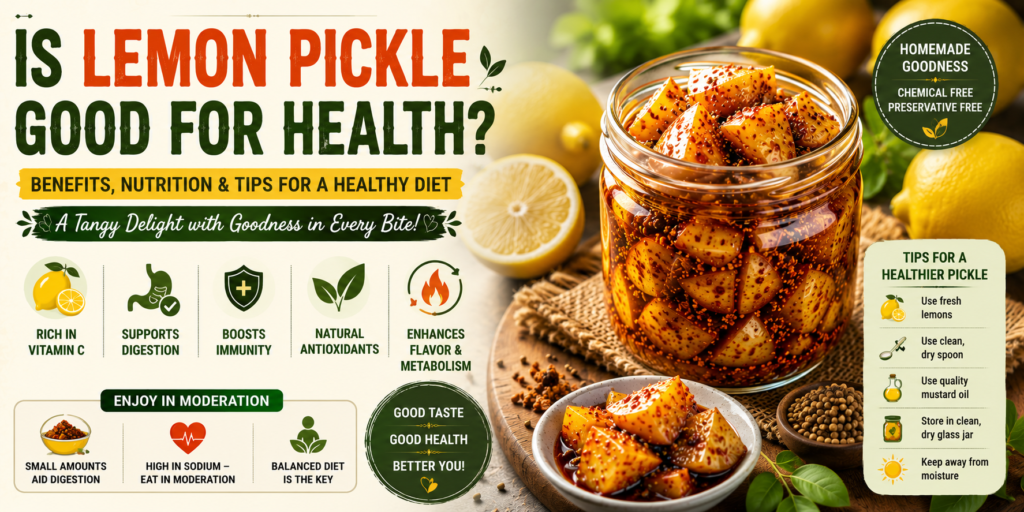
The answer depends on how it’s prepared, the ingredients used, and the amount consumed. Homemade lemon pickle made with fresh lemons, traditional spices, and quality oil can be part of a balanced diet when enjoyed in moderation. Lemons provide Vitamin C, while spices like turmeric, mustard, fennel, and fenugreek contribute flavor and naturally occurring plant compounds.
In this guide, we’ll explore the nutritional value of lemon pickle, its potential health benefits, possible drawbacks, and practical tips for enjoying it as part of a healthy lifestyle.
What Is Lemon Pickle?
Lemon pickle is a traditional Indian preserve made from fresh lemons, salt, spices, and often mustard oil or sesame oil. The lemons are cured over time, allowing them to soften and absorb the flavors of the spice mixture.
Popular variations include:
- Traditional oil-based lemon pickle
- Oil-free lemon pickle
- Sweet lemon pickle
- Spicy lemon pickle
- Instant lemon pickle
Each version has its own unique taste and preparation method.
Nutritional Value of Lemon Pickle
The nutritional profile varies depending on the recipe, but homemade lemon pickle generally contains:
- Vitamin C (from lemons)
- Dietary fiber
- Antioxidants
- Natural plant compounds
- Small amounts of minerals such as potassium
Traditional recipes may also contain:
- Healthy fats (from mustard or sesame oil)
- Sodium (from salt)
- Spices such as turmeric, mustard, fennel, fenugreek, and hing
Because recipes differ, nutrition values can vary significantly.
Health Benefits of Lemon Pickle
1. Rich Source of Vitamin C
Lemons have Vitamin C, a nutrient that helps the immune system work properly helps make collagen and gives protection against harmful substances.
Even though some Vitamin C can be lost when lemons are prepared and stored lemon pickle can still add to the amount of Vitamin C a person gets.
2. Supports Digestion
Indian spices, like fennel and mustard and fenugreek and asafoetida are used in lemon pickle.
These Indian spices have been used for a time to help with digestion.
People like to eat a bit of lemon pickle with their meals because it helps them digest their food.
This is why many people eat lemon pickle with their meals.
3. Adds Flavor to Healthy Meals
Lemon pickle enhances the taste of simple foods such as:
- Dal
- Rice
- Khichdi
- Chapati
- Paratha
- Curd rice
Adding a small amount of pickle can make home-cooked meals more enjoyable without needing large portions.
4. Contains Natural Antioxidants
Lemons and several traditional spices contain naturally occurring antioxidants that help protect cells from oxidative stress.
A varied diet rich in fruits, vegetables, and whole foods remains the best source of antioxidants.
5. May Help Reduce Food Waste
Preparing lemon pickle is a traditional way to preserve seasonal lemons, extending their usability and reducing food waste.
Is Homemade Lemon Pickle Healthier Than Store-Bought?
Homemade lemon pickle often gives you greater control over:
- Ingredient quality
- Spice levels
- Oil quantity
- Salt quantity
- Preservatives
Many homemade recipes avoid artificial colors and unnecessary additives.
Store-bought options can also be a good choice if they use quality ingredients and are produced under hygienic conditions. Always read the ingredient list and nutrition label before purchasing.
Are There Any Health Risks?
While lemon pickle can be enjoyed as part of a balanced diet, there are a few points to consider.
High Sodium Content
Salt is an essential preservative in traditional pickle recipes.
People who need to limit sodium intake—such as those advised by a healthcare professional—should pay attention to portion sizes.
Oil Content
Traditional oil-based pickles contain edible oils such as mustard oil or sesame oil.
These oils contribute flavor and preservation but also increase the calorie content.
Added Sugar in Sweet Recipes
Some lemon pickle recipes include sugar or jaggery, which increases carbohydrate content.
If you’re monitoring your sugar intake, check the recipe or product label.
How Much Lemon Pickle Should You Eat?
Moderation is the key.
A small serving alongside meals is generally enough to enjoy the flavor without consuming excessive salt or oil.
Your ideal portion depends on your overall diet and any advice from your healthcare provider.
Who Should Be Careful?
You may want to moderate your intake or seek professional advice if you:
- Have been advised to follow a low-sodium diet
- Are managing high blood pressure
- Are monitoring calorie intake
- Are controlling blood sugar levels
- Have been advised to avoid highly salted foods
Always follow personalized dietary advice from a qualified healthcare professional.
Tips for Choosing a Healthy Lemon Pickle
When buying or preparing lemon pickle, look for:
- Fresh lemons
- Quality spices
- Clean preparation methods
- Minimal unnecessary additives
- Proper packaging
- Trusted manufacturers
Homemade recipes also allow you to adjust salt and spice levels according to your preferences.
Best Ways to Enjoy Lemon Pickle
Lemon pickle pairs well with:
- Dal and rice
- Chapati
- Paratha
- Khichdi
- Thepla
- Curd rice
- Idli
- Dosa
- Stuffed parathas
Using it as a condiment rather than a main food helps keep portions balanced.
Homemade vs Store-Bought Lemon Pickle
| Homemade Lemon Pickle | Store-Bought Lemon Pickle |
| Ingredient control | Ready to use |
| Adjustable salt and spices | Standardized taste |
| Traditional preparation | Commercial production |
| Fresh homemade flavor | Consistent flavor |
| No unnecessary additives in many recipes | Ingredients vary by brand |
Both options can fit into a balanced diet when consumed in moderation.
Conclusion
Lemon pickle is good for your health. This is true when you have it in moderation. It is part of a diet that is balanced. When you make lemon pickle at home you get the goodness of lemons and the spices that people have used for a long time. These spices make food taste better and more interesting.
Lemon pickle usually has a lot of salt in it. Sometimes it has oil or sugar in it depending on how you make it. So it is better to have it as something that adds flavor to your food not as the food. If you choose ingredients and store it properly you can have it in a way that is good for you. You should also be careful, about how much of it you have. This way you can enjoy lemon pickle, which’s a traditional Indian food that people have loved for a long time.
Frequently Asked Questions (FAQs)
1. Is lemon pickle healthy?
Homemade lemon pickle can be part of a balanced diet when eaten in moderation. It contains Vitamin C from lemons and traditional spices but is also typically high in salt.
2. Can I eat lemon pickle every day?
Small amounts may fit into many people’s diets, but portion size matters. If you have specific medical or dietary concerns, consult a healthcare professional.
3. Is homemade lemon pickle better than store-bought?
Homemade versions offer more control over ingredients and seasoning, while quality store-bought products provide convenience. The better choice depends on your preferences and dietary needs.
4. Does lemon pickle help digestion?
Traditional spices used in lemon pickle have long been included in Indian cooking to complement digestion. However, digestive effects can vary from person to person.
5. Who should avoid eating too much lemon pickle?
People following low-sodium diets, managing high blood pressure, or monitoring sugar or calorie intake should consume lemon pickle carefully and follow professional dietary advice.