Introduction
People really love lemon pickle also known as Nimbu Ka Achar in many Indian kitchens. They like it because it tastes sour and makes meals better.. A lot of people who cook at home worry, about keeping the pickle fresh for a long time. If you do not make or store lemon pickle correctly it can get moldy smell change color or taste bad.
The good thing is that it is easy to keep lemon pickle from going bad if you do a things right. If you pick lemons and use the right amount of salt and keep the pickle dry and store it in clean jars it will last a lot longer.
In this guide you will learn how to keep lemon pickle from spoiling what mistakes people usually make, why lemon pickle goes bad and how to store it so it stays fresh and tastes good for a time. You will learn about lemon pickle and how to make it last.
Why Does Lemon Pickle Spoil?
Understanding the causes of spoilage helps you avoid them.
Common reasons include:
- Excess moisture
- Dirty or damp jars
- Wet spoons
- Insufficient salt
- Low oil level in oil-based recipes
- Poor-quality ingredients
- Exposure to air
- Improper storage conditions
These factors encourage the growth of unwanted microorganisms that affect the pickle’s quality.
1. Choose Fresh, High-Quality Lemons
Always start with:
- Fresh lemons
- Firm texture
- Smooth skin
- No cuts or bruises
- No mold or soft spots
Good-quality lemons help improve both flavor and shelf life.
2. Wash and Dry the Lemons Thoroughly
Wash the lemons carefully to remove dirt and residue.
Most importantly, dry them completely using a clean cloth before cutting.
Even small amounts of moisture can reduce the shelf life of homemade pickle.
3. Use the Right Amount of Salt
Salt is one of the oldest natural preservatives.
It helps:
- Draw out moisture from the lemons
- Create an environment that discourages microbial growth
- Enhance flavor
Using too little salt can increase the risk of spoilage, so follow your recipe carefully.
4. Use Quality Mustard Oil or Sesame Oil
For traditional oil-based recipes, choose fresh, high-quality oil.
Heat mustard oil until it reaches the smoking point, then allow it to cool before mixing it into the pickle.
The oil forms a protective layer that helps preserve the pickle and enhances its flavor.
5. Sterilize Glass Jars Before Use
Always store lemon pickle in:
- Clean glass jars
- Sterilized containers
- Completely dry jars
Avoid plastic containers for long-term storage whenever possible, especially for traditional oil-based pickles.
6. Keep Moisture Away
Moisture is one of the biggest causes of pickle spoilage.
Avoid:
- Wet hands
- Wet spoons
- Damp jars
- Water entering the container
Always use a clean, dry spoon to serve the pickle.
7. Allow Proper Maturation
Traditional lemon pickle requires time for the flavors to develop.
Many recipes recommend placing the sealed jar in sunlight for 7–15 days, depending on the method used.
During this period:
- Shake the jar gently every few days.
- Ensure the lid remains tightly closed.
Proper maturation helps soften the lemons and balance the flavors.
8. Store in the Right Place
Choose a storage location that is:
- Cool
- Dry
- Clean
- Away from direct moisture
Avoid storing the jar near the stove, sink, or humid areas.
9. Keep the Pickle Covered with Oil (For Oil-Based Recipes)
If you’re making a traditional oil-based pickle:
- Ensure the lemon pieces remain covered with oil.
- Add a little extra oil if necessary after serving.
The oil helps protect the pickle from air exposure.
10. Close the Lid Properly
Always seal the jar tightly after each use.
This helps prevent:
- Air exposure
- Moisture
- Dust
- Insects
A properly sealed jar significantly improves shelf life.
Common Mistakes That Cause Lemon Pickle to Spoil
Avoid these common mistakes:
- Using wet lemons
- Using damp utensils
- Storing in unclean jars
- Adding too little salt
- Using poor-quality oil
- Leaving the lid open
- Touching the pickle with wet hands
- Storing in humid places
These errors are among the most common reasons homemade pickles spoil.
Signs That Lemon Pickle Has Spoiled
Check your pickle regularly.
Signs of spoilage may include:
- Visible mold
- Foul or unpleasant odor
- Slimy texture
- Unusual discoloration
- Gas formation in the jar
- Fermented smell that differs from the recipe’s expected aroma
If significant spoilage is present, it is safest to discard the pickle rather than consume it.
How Long Does Homemade Lemon Pickle Last?
Shelf life depends on:
- Ingredients used
- Salt quantity
- Oil level
- Hygiene during preparation
- Storage conditions
Properly prepared traditional oil-based lemon pickle often remains usable for several months when stored correctly.
Always inspect the pickle before consuming it.
Homemade vs Store-Bought Lemon Pickle
| Homemade Lemon Pickle | Store-Bought Lemon Pickle |
| Fresh ingredients | Commercial production |
| Control over salt and spices | Standardized recipe |
| Traditional preparation | Mass production |
| Adjustable flavor | Fixed taste |
| Small-batch quality | Large-scale manufacturing |
Both options can be enjoyable when prepared or produced under hygienic conditions.
Best Practices for Long-Lasting Lemon Pickle
Follow this simple checklist:
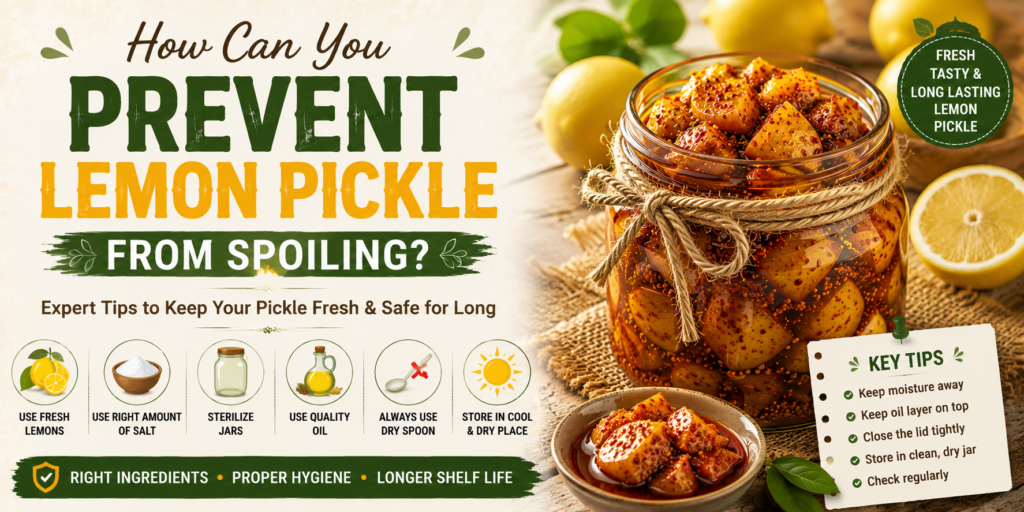
- ✔ Use fresh lemons
- ✔ Dry ingredients thoroughly
- ✔ Sterilize jars
- ✔ Use enough salt
- ✔ Use quality oil
- ✔ Store in glass jars
- ✔ Keep away from moisture
- ✔ Use dry spoons only
- ✔ Seal the lid tightly
- ✔ Store in a cool, dry place
These habits can help maintain quality over time.
Conclusion
Preventing homemade lemon pickle from spoiling isn’t difficult—it simply requires attention to cleanliness, quality ingredients, proper preservation, and careful storage. By choosing fresh lemons, using the correct amount of salt and oil, avoiding moisture, and storing the pickle in sterilized glass jars, you can enjoy flavorful homemade Nimbu Ka Achar for months.
Whether you’re making lemon pickle for your family or as part of a homemade food business, following these proven storage tips will help preserve its taste, texture, and quality.
Frequently Asked Questions (FAQs)
1. Why does homemade lemon pickle spoil?
Lemon pickle usually spoils because of moisture, unclean jars, wet utensils, insufficient salt, poor-quality oil, or improper storage.
2. How can I make lemon pickle last longer?
Use fresh lemons, dry all ingredients completely, sterilize glass jars, use enough salt and oil (for oil-based recipes), and always use a dry spoon.
3. Can I refrigerate homemade lemon pickle?
Some recipes can be refrigerated after opening, while many traditional oil-based recipes are stored in a cool, dry place. Follow the storage guidance for your specific recipe.
4. How do I know if lemon pickle has gone bad?
Signs include mold, foul odor, slimy texture, unusual discoloration, or gas buildup. If these are present, discard the pickle.
5. Which container is best for storing lemon pickle?
A clean, dry, sterilized glass jar with a tight-fitting lid is generally the preferred choice for long-term storage.