Introduction
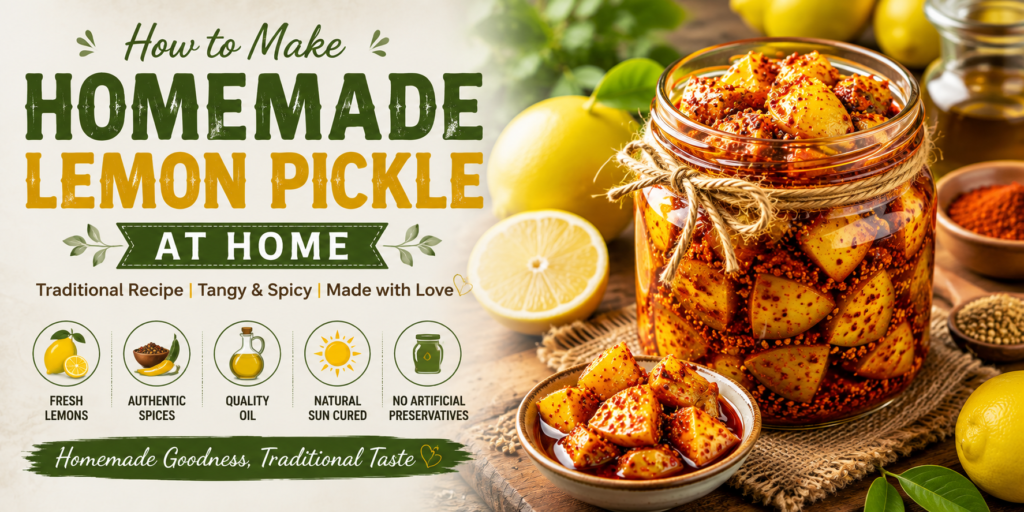
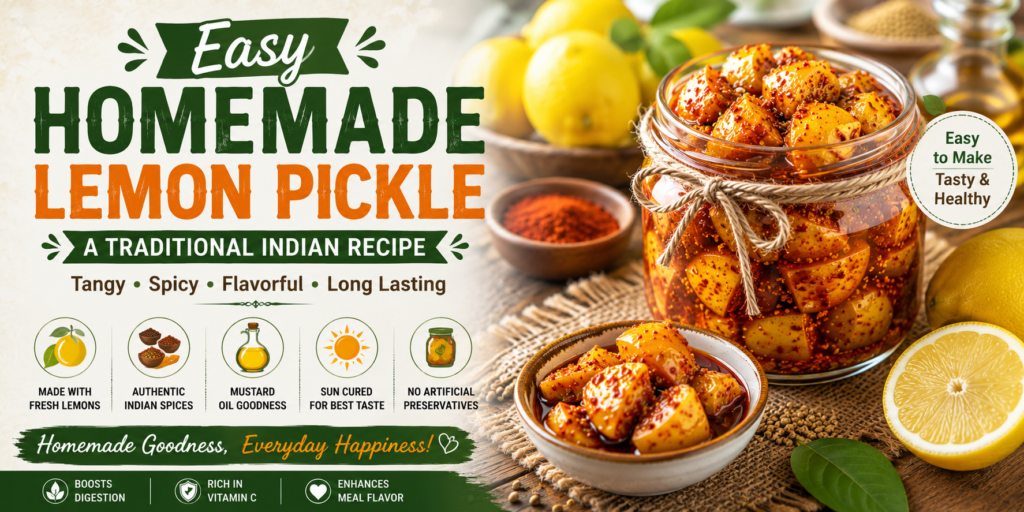
If you are looking for a homemade lemon pickle recipe you are in the right place. Lemon pickle, which is also called Nimbu Ka Achar is one of the popular traditional condiments in India. The sharp hot and tasty flavor of lemon pickle can make the simplest meal special. Lemon pickle can be served with parathas with dal-rice with curd rice with khichdi or with stuffed rotis. Lemon pickle adds a taste to every bite.
Making lemon pickle at home is very easy. Needs only a few ingredients. Fresh lemons, nice spices, salt and mustard oil mix together to make a pickle that tastes real and stays fresh for months if stored correctly. Compared to store-bought types homemade pickle lets you choose the quality of the ingredients and change the heat level based on your preference.
In this guide you will learn a way to make lemon pickle at home. then you will find some tips for preparing it. You will also learn about the health benefits of lemon pickle.. You will find out how to store it correctly to keep it fresh for as long, as possible.
What Is Lemon Pickle?
Lemon pickle is something that people in India have been making for a time. They make it by putting lemons in a mixture of salt, spices and oil. As time passes the lemons get soft. They start to taste like the spices they are in. This makes the lemon pickle taste really good it is sour and spicy and a bit bitter.
People in parts of India make lemon pickle in their own way. Some people like their lemon pickle to be really spicy. Other people like to add a sugar or jaggery to make it sweet and sour at the same time. Some people use a lot of oil to make their lemon pickle and other people do not use any oil all it just depends on what people, in that area are used to doing with their lemon pickle.
Ingredients You’ll Need
For this easy homemade lemon pickle recipe, gather the following ingredients:
- 1 kg fresh lemons
- 180–200 g salt
- 2 tablespoons turmeric powder
- 3 tablespoons red chili powder
- 3 tablespoons coarsely ground mustard seeds
- 2 tablespoons fennel seeds
- 1 tablespoon fenugreek seeds
- ½ teaspoon asafoetida (hing)
- 250 ml mustard oil
Optional ingredients
- Nigella seeds (kalonji)
- Carom seeds (ajwain)
- Green chilies
- Garlic cloves
- Jaggery for a sweet version
Step-by-Step Easy Homemade Lemon Pickle Recipe
Step 1: Select Fresh Lemons
Choose ripe, firm, and juicy lemons without cuts or bruises. Fresh lemons produce the best flavor and texture.
Step 2: Wash and Dry
Wash the lemons thoroughly under running water.
Dry them completely using a clean cotton cloth. Moisture can reduce the shelf life of the pickle, so this step is essential.
Step 3: Cut the Lemons
Cut each lemon into four or eight pieces depending on its size.
Leave the seeds unless they are damaged or excessive.
Step 4: Mix with Salt
Place all lemon pieces in a large bowl.
Add salt and mix thoroughly.
Cover the bowl and leave it for 2–3 days, stirring once daily. This process softens the lemons naturally.
Step 5: Prepare the Spice Mix
In another bowl, combine:
- Turmeric powder
- Red chili powder
- Mustard seeds
- Fennel seeds
- Fenugreek seeds
- Hing
Mix well so the spices are evenly distributed.
Step 6: Heat the Mustard Oil
Heat mustard oil until it reaches the smoking point.
Allow it to cool completely before adding it to the pickle.
This helps mellow the strong flavor of raw mustard oil.
Step 7: Combine Everything
Mix the softened lemons with the spice blend.
Pour the cooled mustard oil over the mixture and stir until every lemon piece is evenly coated.
Step 8: Fill the Jar
Transfer the pickle into a sterilized glass jar.
Close the lid tightly.
If following the traditional method, place the jar in sunlight for 7–15 days and gently shake it every couple of days.
As the pickle matures, the flavors deepen and the lemons become softer.
Tips for the Best Homemade Lemon Pickle
For excellent results, keep these tips in mind:
- Use fresh, juicy lemons.
- Ensure the lemons are completely dry.
- Sterilize glass jars before use.
- Always use dry spoons.
- Use fresh spices for maximum flavor.
- Keep oil-based pickles fully covered with oil.
- Store away from moisture and direct contamination.
Following these practices helps improve both taste and shelf life.
Health Benefits of Lemon Pickle
When enjoyed in moderation, homemade lemon pickle can be a flavorful part of a balanced diet.
Rich in Vitamin C
Lemons naturally contain Vitamin C, which supports normal immune function and helps protect cells from oxidative stress.
Supports Digestion
Traditional spices like fennel, mustard, and hing are commonly used to support healthy digestion.
Enhances Meal Flavor
A small serving of lemon pickle can make everyday meals more enjoyable, encouraging home-cooked eating.
Traditional Preservation
Salt and mustard oil help preserve the lemons naturally while enhancing their flavor.
Because lemon pickle is relatively high in sodium, it should be enjoyed in moderation.
Common Mistakes to Avoid
Avoid these common errors:
- Using wet lemons
- Using damp jars
- Adding insufficient salt
- Using stale spices
- Using wet spoons
- Not allowing enough maturation time
- Improper storage
Preventing these mistakes helps maintain flavor, texture, and shelf life.
How to Store Homemade Lemon Pickle
Proper storage is key to keeping your pickle fresh.
Store it:
- In sterilized glass jars
- In a cool, dry place
- Away from moisture
- With the lid tightly sealed
- Using only clean, dry spoons
Many traditional lemon pickles can remain fresh for several months when stored correctly.
Homemade vs Store-Bought Lemon Pickle
| Homemade Lemon Pickle | Store-Bought Lemon Pickle |
| Fresh ingredients | Commercial production |
| Adjustable spice level | Standardized flavor |
| No unnecessary additives in many homemade recipes | Ingredients vary by brand |
| Traditional family recipe | Mass-produced |
| Authentic homemade taste | Consistent commercial taste |
Homemade lemon pickle gives you greater control over ingredients and allows you to customize the flavor according to your preference.
Best Foods to Pair with Lemon Pickle
Lemon pickle pairs beautifully with:
- Dal and rice
- Plain rice
- Paratha
- Stuffed paratha
- Chapati
- Khichdi
- Curd rice
- Poori
- Thepla
- Idli and dosa
Its tangy flavor enhances both simple and festive meals.
Conclusion
This simple homemade lemon pickle recipe shows that making Nimbu Ka Achar at home is easy and fun. Using lemons good spices and the right way to store it you can make a tasty pickle that stays for many months and goes well with different Indian foods.
No matter if you like it with meals or serve it for special events homemade lemon pickle mixes tradition, flavor and the joy of making something delicious in your own kitchen.
Frequently Asked Questions (FAQs)
1. How long does homemade lemon pickle last?
When prepared hygienically and stored in a clean, airtight glass jar, homemade lemon pickle can remain fresh for several months. Shelf life depends on the ingredients and storage conditions.
2. Can I make lemon pickle without mustard oil?
Yes. Some regional recipes use sesame oil or no oil at all. However, the flavor and shelf life may vary depending on the recipe.
3. Why is my lemon pickle bitter?
Bitterness may occur due to certain lemon varieties, excess pith, or insufficient curing time. Allowing the pickle to mature fully often improves its taste.
4. Is homemade lemon pickle healthy?
When consumed in moderation, homemade lemon pickle can be part of a balanced diet. It contains Vitamin C from lemons but is also relatively high in salt.
5. Can I refrigerate homemade lemon pickle?
Some recipes can be refrigerated after opening, while others are traditionally stored in a cool, dry place. Follow the storage recommendations for your specific recipe.