Introduction
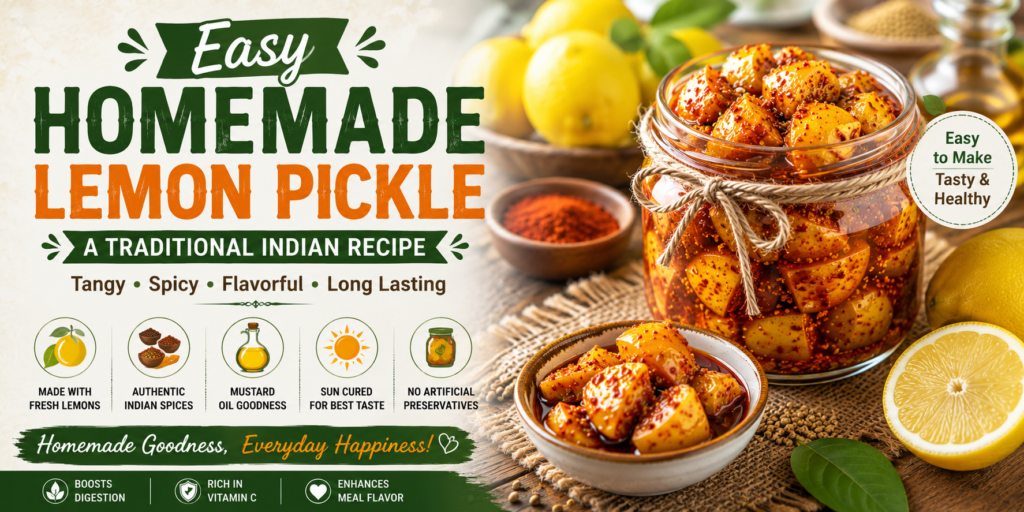
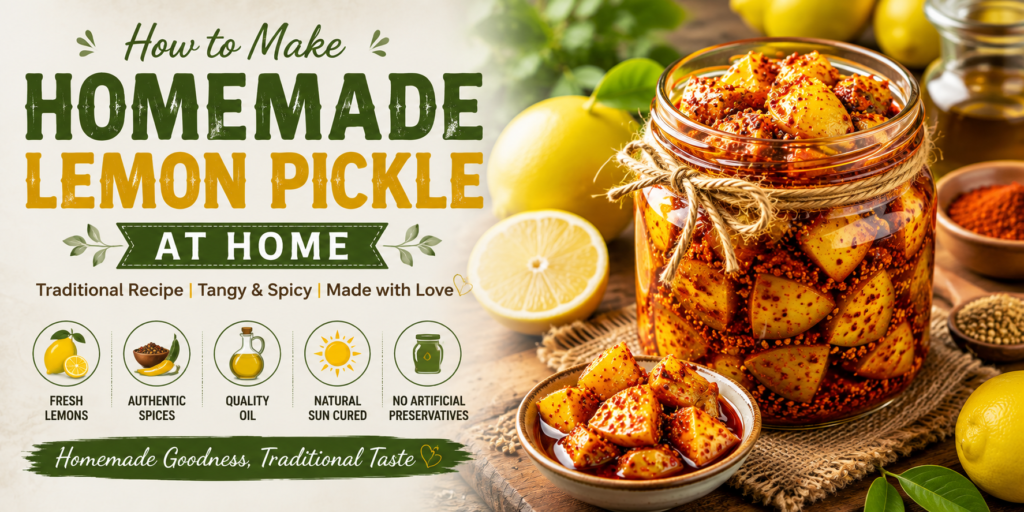
Homemade lemon pickle is really good for food. It gives a burst of tangy and spicy flavor. People in India have been making lemon pickle also known as Nimbu Ka Achar for a long time. They use lemons, nice smelling spices, salt and oil to make it. Lemon pickle goes well with lots of things like parathas, dal-rice, curd rice and khichdi.
I think one of the things about homemade lemon pickle is that it is easy to make. You just need a things from your kitchen and a little time. Then you can make a pickle that will last for months if you store it properly. When you make lemon pickle at home you get to choose what goes in it how spicy it. How good the ingredients are. This is better than buying it from a store.
In this guide we will tell you how to make lemon pickle. We will give you the list of ingredients you need some good tips to make it perfect how to store it why it is good, for you. We will answer some questions that people often ask about lemon pickle.
What Is Homemade Lemon Pickle?
I really love lemon pickle. It is an Indian thing that people make at home. They make it by putting lemons with salt and spices and edible oil together. After some time the lemons become soft. They take in all the flavors. This makes a nice condiment that is tangy and spicy and a little sour. Homemade lemon pickle is great because it makes our everyday meals taste better. We use lemon pickle to make our food taste good.
Depending on the region, lemon pickle can be:
- Spicy
- Sweet and sour
- Oil-based
- Oil-free
- Instant
- Naturally matured in sunlight
Each variation has its own distinctive taste and preparation method.
Ingredients Required
To prepare traditional homemade lemon pickle, you’ll need:
- 1 kg fresh lemons
- 150–200 g salt
- 2–3 tablespoons turmeric powder
- 3–4 tablespoons red chili powder
- 4 tablespoons roasted mustard seeds (coarsely ground)
- 2 tablespoons fennel seeds
- 1 tablespoon fenugreek seeds
- ½ teaspoon asafoetida (hing)
- 250–300 ml mustard oil (or sesame oil, depending on regional preference)
Optional ingredients:
- Nigella seeds (Kalonji)
- Carom seeds (Ajwain)
- Jaggery or sugar for a sweet version
- Green chilies
- Garlic
How to Make Homemade Lemon Pickle at Home
Step 1: Choose Fresh Lemons
Select ripe, firm, and blemish-free lemons. Fresh lemons provide the best flavor and texture.
Step 2: Wash and Dry Completely
Wash the lemons thoroughly to remove dirt and residue.
Dry them completely using a clean cloth. Any moisture may reduce the shelf life of the pickle.
Step 3: Cut the Lemons
Slice each lemon into four or eight pieces, depending on your preferred size.
Remove only damaged seeds if necessary.
Step 4: Mix with Salt
Place the lemon pieces in a large bowl.
Add salt and mix thoroughly.
Leave the mixture covered for 2–3 days, stirring once daily. This helps soften the lemons naturally.
Step 5: Prepare the Spice Mix
Combine:
- Turmeric powder
- Red chili powder
- Mustard seeds
- Fennel seeds
- Fenugreek seeds
- Hing
Mix well until evenly blended.
Step 6: Heat the Oil
Heat mustard oil until it reaches its smoking point.
Allow it to cool completely before adding it to the pickle.
Step 7: Combine Everything
Mix the softened lemons with the prepared spice blend.
Pour the cooled oil over the mixture and stir thoroughly to ensure every piece is coated.
Step 8: Store in a Glass Jar
Transfer the pickle into a clean, dry, sterilized glass jar.
Seal the lid tightly.
Place the jar in sunlight for 7–15 days if your recipe recommends natural maturation. Shake or stir gently every couple of days.
Tips for Making the Perfect Lemon Pickle
Follow these expert tips:
- Use fresh, juicy lemons.
- Ensure lemons are completely dry before cutting.
- Sterilize jars before use.
- Always use dry spoons.
- Use fresh spices for better flavor.
- Keep the pickle covered with sufficient oil in oil-based recipes.
- Store away from moisture.
These simple practices help improve both taste and shelf life.
Health Benefits of Homemade Lemon Pickle
When consumed in moderation, homemade lemon pickle can be part of a balanced diet.
Rich in Vitamin C
Lemons naturally contain Vitamin C, which supports normal immune function.
Supports Digestion
Traditional spices such as fennel, mustard, and hing are commonly used to aid digestion.
Adds Flavor to Meals
A small serving of lemon pickle can make simple home-cooked meals more enjoyable.
Natural Preservation
Salt and oil act as traditional preserving agents, helping extend the pickle’s shelf life.
Common Mistakes to Avoid
Avoid these mistakes while making lemon pickle:
- Using wet lemons
- Adding insufficient salt
- Using poor-quality oil
- Storing in damp containers
- Using wet spoons
- Closing jars before cooling completely
- Skipping the maturation process
These mistakes can affect flavor and increase the risk of spoilage.
How to Store Homemade Lemon Pickle
Proper storage is essential for maintaining freshness.
Store your pickle:
- In sterilized glass jars
- Away from direct moisture
- In a cool, dry place
- With the lid tightly closed
- Using only clean, dry utensils
Properly prepared lemon pickle can remain fresh for several months, depending on ingredients and storage conditions.
Homemade vs Store-Bought Lemon Pickle
| Homemade Lemon Pickle | Store-Bought Lemon Pickle |
| Fresh ingredients | Commercial production |
| Adjustable spice levels | Fixed flavor profile |
| Traditional recipe | Standardized recipes |
| Homemade taste | Brand-specific taste |
| Small-batch preparation | Large-scale manufacturing |
Homemade pickle offers greater control over ingredients and flavor, while store-bought options provide convenience.
Best Foods to Enjoy with Lemon Pickle
Homemade lemon pickle pairs well with:
- Paratha
- Chapati
- Dal and Rice
- Khichdi
- Curd Rice
- Stuffed Parathas
- Poori
- Thepla
- Idli
- Dosa
Its tangy flavor enhances a wide variety of Indian meals.
Conclusion
Making lemon pickle at home is a way to keep fresh lemons good for a long time. You can have an Indian condiment to eat with your meals all year round.
If you use ingredients keep everything clean and make it the traditional way your lemon pickle will be very tasty. It will go well with the food you eat every day.
You can make lemon pickle spicy, sweet or the classic way. Homemade lemon pickle is fresh it is real. It feels good to make something that your family has been eating for a long time right in your own kitchen. You can have lemon pickle that’s spicy or lemon pickle that is sweet or you can make classic lemon pickle it is up, to you and it is always lemon pickle that you make at home.
Frequently Asked Questions (FAQs)
1. How long does homemade lemon pickle last?
When stored properly in a clean, dry, airtight glass jar, homemade lemon pickle can remain fresh for several months. Shelf life depends on the recipe, ingredients, and storage conditions.
2. Can I make lemon pickle without oil?
Yes. Several traditional recipes use only lemons, salt, and spices. However, shelf life and storage recommendations may differ from oil-based recipes.
3. Which oil is best for lemon pickle?
Mustard oil is widely used in North India for its bold flavor, while sesame oil is popular in many South Indian recipes. Choose according to your recipe and regional preference.
4. Why is my lemon pickle bitter?
Bitterness may result from certain lemon varieties, excess pith, or insufficient maturation. Allowing the pickle to mature fully often helps balance the flavor.
5. Can lemon pickle be refrigerated?
Many traditional recipes are stored at room temperature in a cool, dry place. Refrigeration may be suitable for some recipes or climates, but always follow the storage guidance for your specific preparation.